Fix Nvidia gaming console HDMI and 4K/120 issues
Getting 4K120 or VRR working with modern consoles and TVs can feel like solving a puzzle. One wrong setting or cable can drop you back to 4K60 or even 1080p, and sometimes the screen just goes black when you enable the higher refresh rate. This walkthrough focuses on stabilizing the HDMI chain so your Nvidia console and Nvidia device can agree on 4K120 or VRR.
Quick sanity checks
- Confirm the port supports 4K120/VRR
Many TVs only support full"ΓÇÿbandwidth HDMI 2.1 on one or two ports. Look for labels like "4K 120," "Game," or "HDMI 2.1" in the manual. - Use a certified Ultra High Speed HDMI cable
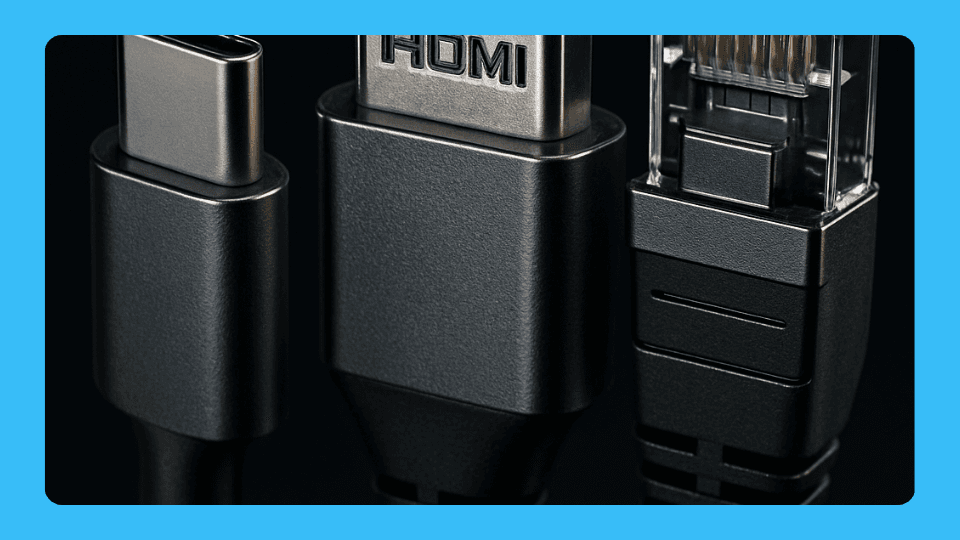
4K120 and VRR push far more data than 4K60. A cable that worked fine before can fail at higher refresh (this is more common than you'd think). - Update firmware on the console and TV
Both sides have shipped fixes for VRR and 4K120 stability. Install any pending updates before deeper troubleshooting.
Dial in console video settings
- Set resolution to 4K first
On your console, choose 4K (UHD) at 60 Hz with HDR enabled. Confirm this is stable before turning on 120 Hz or VRR. - Enable 120 Hz or VRR gradually
Once 4K60 is solid, enable 120 Hz. If that works, try VRR next. If the screen goes black at any step, roll back and adjust one thing at a time. - Disable ALLM or extra processing if needed
Some TVs interact poorly with ALLM or additional gaming modes. If input lag is acceptable, try disabling them while you stabilize the picture.
Tune the TV or receiver
- Turn off aggressive motion or noise reduction
Heavy processing can interfere with gaming modes. Use the TV's game preset or a simplified picture mode. - Check HDMI input format
Many Nvidia TVs have an "Enhanced" or "4K120" mode per HDMI input. Make sure it is enabled for the port your console uses. - If using a receiver, verify 4K passthrough
In the receiver's HDMI settings, choose 8K/4K Enhanced or the highest bandwidth mode. Some older receivers cannot pass 4K120 at all.
Expert tip: test console → TV direct before blaming the receiver
Tip: Before you assume the receiver is broken, connect the console directly to the TV on its best HDMI 2.1 port and test 4K120/VRR there. If that works, but fails when routed through the receiver, you know you are dealing with a bandwidth or compatibility limit in the receiver's HDMI board.
Scenario example
Scenario example: Your Xbox Series X reports that 4K120 and VRR are not supported, even though your Nvidia TV advertises them. After switching the console to HDMI 4 (the only HDMI 2.1 port), enabling "4K 120" mode for that input in the TV menu, and replacing an older HDMI cable with an Ultra High Speed model, the Xbox test screen turns all green and games run at 120 Hz with VRR enabled.
When to compromise and when to escalate
If 4K120 keeps failing but 4K60 with VRR is stable, it may be worth staying at the more reliable mode rather than chasing small gains. However, if the console or TV explicitly supports 4K120 on the port you are using and you still cannot hold a signal even with a known"ΓÇÿgood cable, collect screenshots of the console's test page and the TV's HDMI settings. That information is extremely helpful when contacting Nvidia or the TV manufacturer about HDMI 2.1 issues.