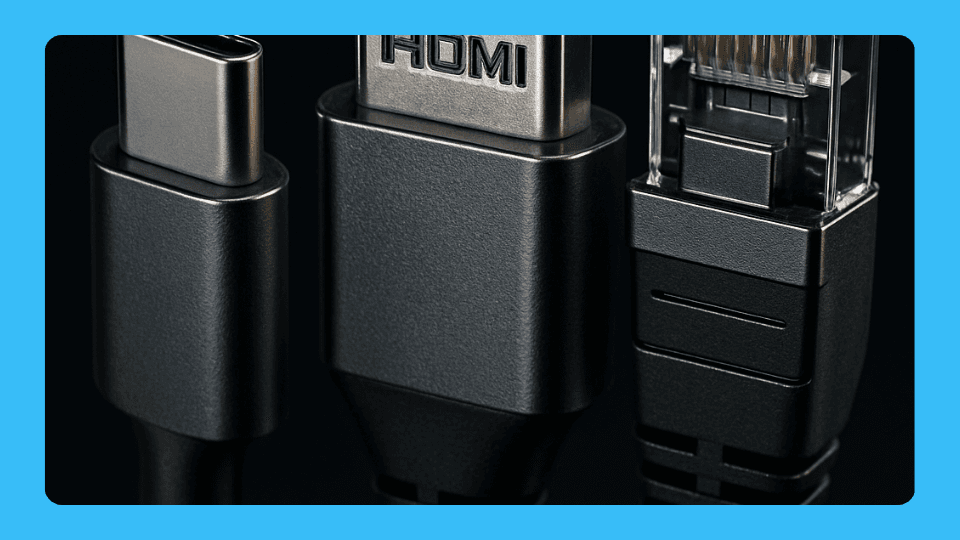
When TV and receiver refuse to pass audio over eARC or ARC, the root cause is typically handshake timing, incorrect port configuration, or cables that can't handle the return audio channel. Most issues resolve with proper connection order and compatible cables.
Quick answer
- Use correct ports: TV's labeled ARC/eARC HDMI port and receiver's TV/eARC HDMI output only
- Power cycle in sequence: TV and receiver off, unplug 30 seconds, reconnect HDMI firmly, power TV first then receiver
- Replace HDMI cable with certified Ultra High Speed cable
- Enable settings: TV eARC/ARC on, receiver HDMI Control/CEC on, ARC/eARC to Auto
Symptoms
- No audio from TV apps through receiver speakers
- TV shows eARC enabled but audio drops when switching content
- PCM audio works but Dolby Atmos or DD+ fails
- Receiver never detects ARC connection despite correct settings
- Audio cuts out every few minutes on specific devices
Quick checks
- Verify port usage: Confirm you're using the TV's ARC-labeled HDMI port and receiver's TV/eARC output
- Check cable seating: Push HDMI connections firmly into both devices
- Test with built-in app: Use TV's Netflix or YouTube app to isolate from external device issues
- Try PCM first: Set TV audio to PCM to test basic connection before advanced formats
Step-by-step fix
-
Power down completely: Turn off TV and receiver, then unplug both devices for 30 seconds
-
Connect HDMI cable: Use certified Ultra High Speed HDMI cable between TV's ARC/eARC port and receiver's TV/eARC output port
-
Power up in sequence: Turn on TV first, wait for full boot, then power on receiver
-
Configure TV settings: Navigate to Settings → Audio → HDMI eARC/ARC and set to On
-
Set TV audio output: Go to Settings → Audio → Output and select Passthrough or Auto (avoid PCM initially)
-
Configure receiver: Enable HDMI Control/CEC in receiver menu and set ARC/eARC mode to Auto
-
Test basic audio: Play content from TV's built-in streaming app to verify connection
-
Disable audio processing: Turn off receiver's Dialogue Enhancer, Virtual Surround, and other processing modes while testing
-
Enable advanced formats: Once stable, enable Dolby/DTS formats in TV audio settings
If it still isn't working
- Update firmware on both TV and receiver — eARC compatibility fixes are frequently patched
- Try shorter cable run if using long HDMI cable, especially for eARC
- Disconnect other HDMI devices temporarily to isolate the audio chain
- Test ARC instead of eARC by disabling eARC on TV to see if basic ARC functions
- Try different HDMI port on TV if multiple ARC ports available
FAQ
Why does audio work sometimes but not others? Inconsistent handshakes often indicate marginal HDMI cable or firmware bugs. Try certified Ultra High Speed cable and check for device updates.
PCM works but Dolby Atmos fails — what's wrong? This points to bandwidth limitations. Use shorter, higher-quality HDMI cable and ensure both devices support the specific audio format you're trying to pass.
Should I use ARC or eARC? Use eARC if both devices support it for better audio quality and fewer compatibility issues. Fall back to ARC only if eARC consistently fails.
TV shows eARC connected but receiver gets no audio — why? Check that TV audio output is set to Passthrough/Auto rather than TV speakers, and verify receiver input is set to the correct HDMI port.
See also
- Receiver HDMI fixes: /categories/receivers-amps
- TV-specific HDMI tips: /categories/tvs